
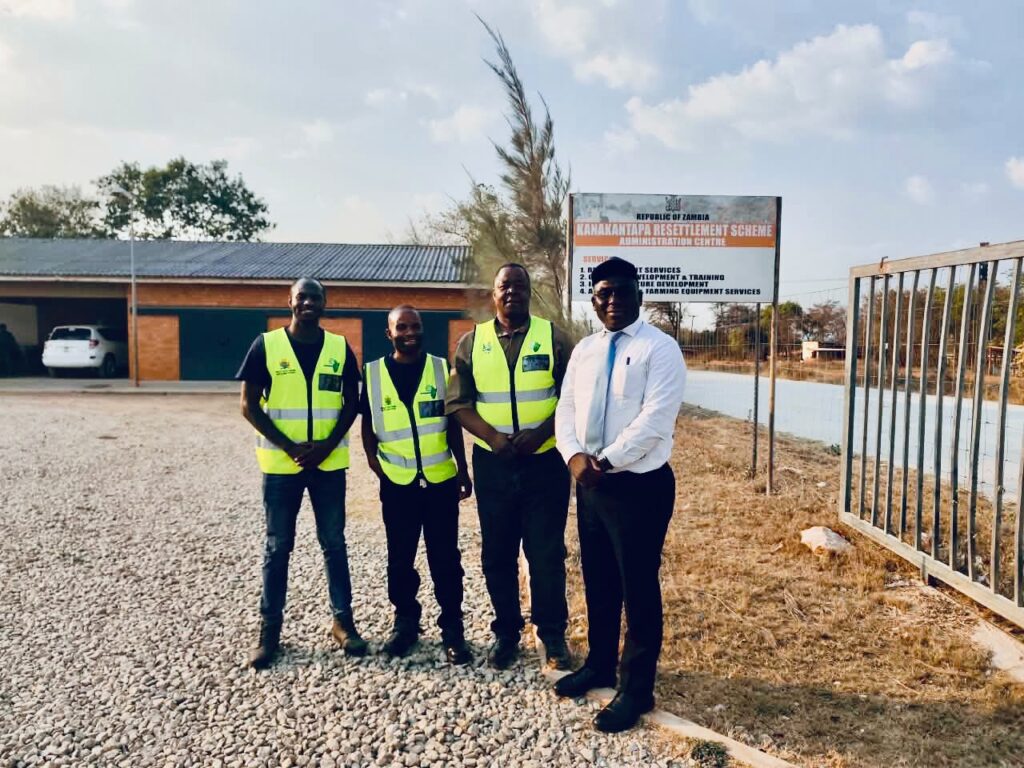
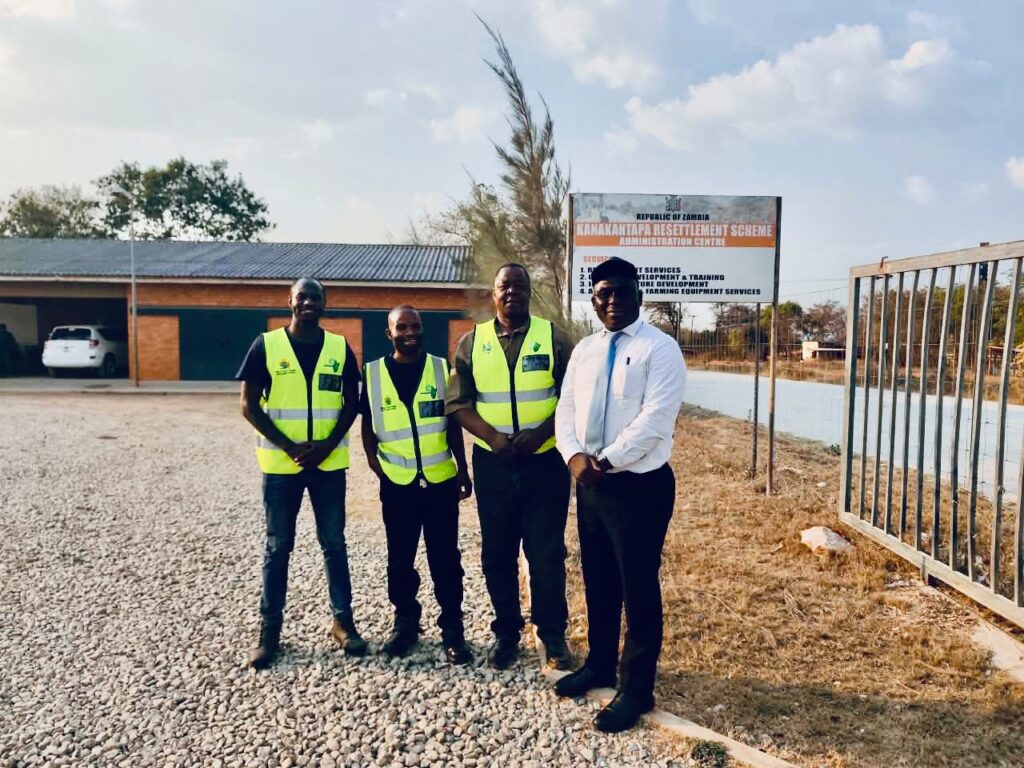
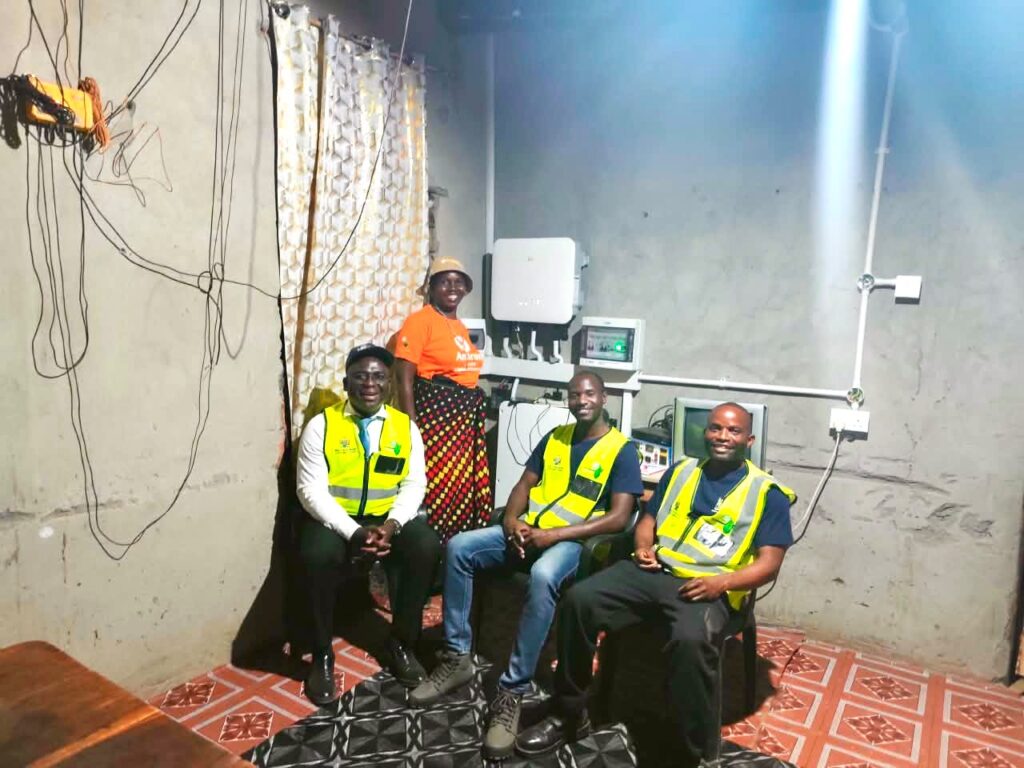
From right to left: Dr. Joas Mukanda Chihangu, Executive Director of Schweizer Agriculture, stands with Mr. Nacala Lwindi, Kanakantapa Resettlement Scheme Manager under the Office of the Vice-President, after a briefing on the Kanakantapa Solar Irrigation Scheme Initiative (KASISI) in Chongwe District. Also pictured are Mr. Gilbert Banda of the Zambia Agriculture Research Institute – Vegetable Research Team (ZARI-VRT), and Mr. Buumba Mweetwa, Meteorological Assistant from the Ministry of Green Economy and Environment / National Irrigation Research Station, Mazabuka, who are providing technical backstopping support to KASISI through the Technical Working Group on Inclusive Seed Multiplication, Horticulture and Landscaping.Government and development stakeholders were recently briefed on progress under the Kanakantapa Solar Irrigation Scheme Initiative (KASISI), ahead of the project’s Farmers Field Day scheduled for Friday, 25 September 2026, in Kanakantapa Resettlement Scheme, Chongwe District.
The briefing, convened by Schweizer Agriculture and its implementing partner, Support for Education and Economic Development (SEED) Foundation, presented key findings from the KASISI Q1-Q2 implementation report and the Zambia Agriculture Research Institute Vegetable Research Team (ZARI-VRT) technical backstopping reports.
The engagement brought together representatives from the Division of Resettlement under the Office of the Vice-President, ZARI, the United Nations Development Programme (UNDP), the Ministry of Green Economy and Environment, Absa Bank, Swift Insurance, technical and development partners, and members of the media.
Representing Government was Ms. Veronica Kasonde, Principal Resettlement Land Development Officer in the Division of Resettlement under the Office of the Vice-President.
“KASISI is positioning resettlement schemes as productive, climate-smart learning hubs where water, energy, finance, markets and farmer support work together.”
Her participation came at an important time, following Government’s call for private companies and SMEs to partner with farmers in resettlement schemes so that existing farming areas can become productive agricultural hubs. The message aligns closely with the KASISI approach, which seeks to demonstrate how resettlement schemes can be supported through water security, solar-powered irrigation, improved seed, farmer training, finance, insurance, markets and cooperative-based scale-up.
Schweizer Agriculture holds the Memorandum of Understanding with Government for agricultural development interventions under which KASISI is being implemented, with SEED Foundation serving as the implementing partner supporting capacity building, farmer mobilisation, technical coordination and community-level learning.
The Q1-Q2 report shows that KASISI has moved from its public launch on 21 January 2026 into field demonstrations, water infrastructure, technical collaboration, access-to-finance pathways, market systems and an emerging scale-up architecture. The report frames the programme around water security, renewable energy, climate-smart production, research, finance, markets and inclusive cooperative scale-up.
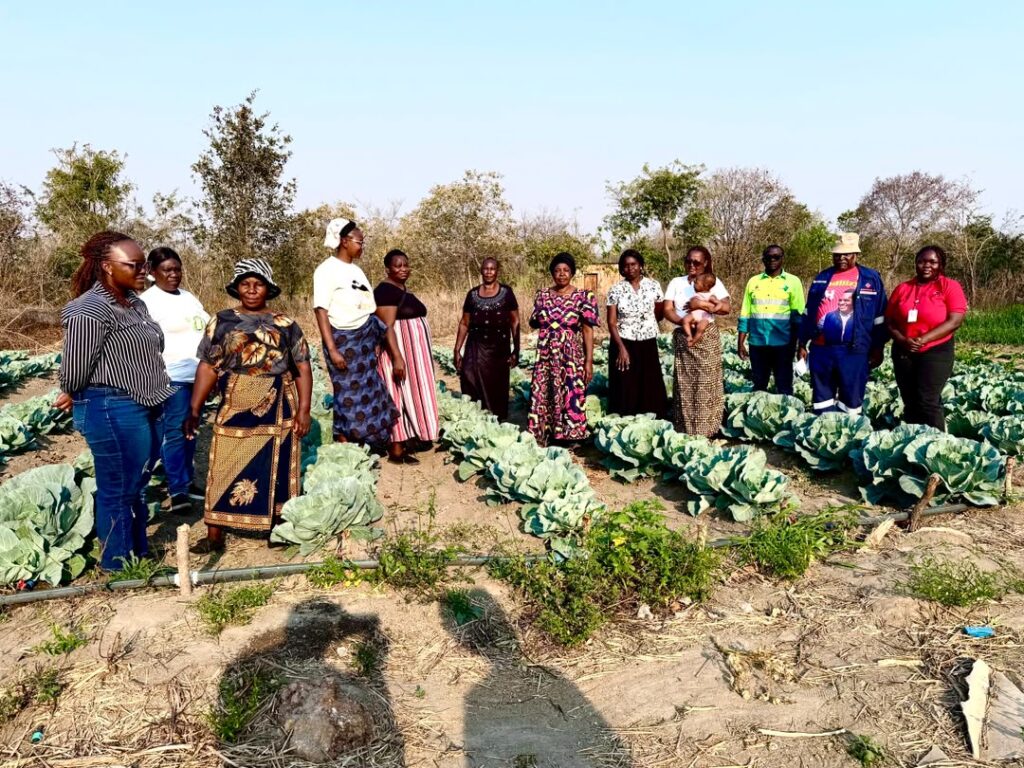
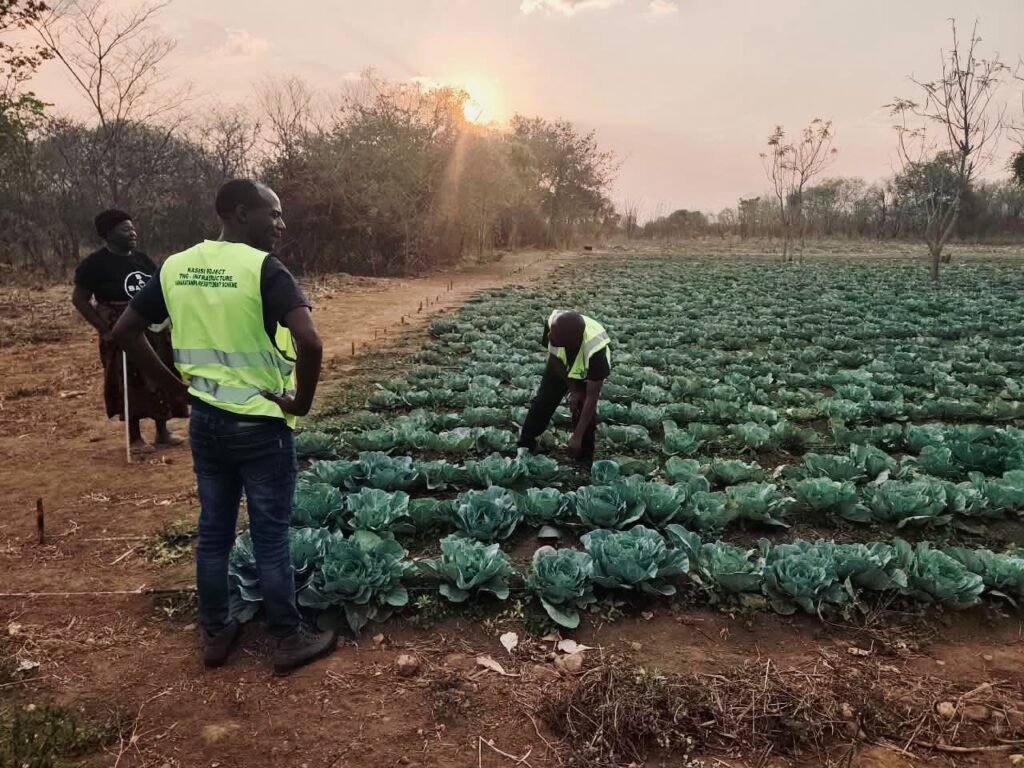
Three lead-farmer sites are central to the practical learning approach. Mr. Kobi Mwansa is championing youth-led cabbage production using SeedCo Majesty F1 cabbage; Ms. Theresa Chewe is advancing chilli and Vikima cabbage production with irrigation support; while Ms. Brandina Banda’s site is being positioned for infrastructure-led demonstration and wider cooperative learning.
The KASISI progress report describes these sites as living demonstration and learning platforms where infrastructure, agronomy, farmer management and partner support can be observed in real operating conditions. The purpose is not only to grow crops, but also to generate practical lessons that surrounding cooperatives can adopt.
Water security has also become a major pillar of the initiative. The report shows borehole evidence for Ms. Theresa Chewe and Ms. Brandina Banda, while emphasising that boreholes must be linked to pump testing, solar or hybrid pumping, storage, filtration, drip irrigation and crop planning before scale-up decisions are made.
The ZARI-VRT technical backstopping framework is supporting agronomy, soil fertility, irrigation management, pest and disease control, crop establishment, record keeping and farmer learning. The framework is intended to help demonstration sites become practical learning hubs supported by evidence, technical correction and farmer-to-farmer exchange.
The initial programme is expected to directly support about 413 farmers, with wider indirect benefits expected to reach more than 1,500 farmers through cooperative learning, demonstrations, extension support and farmer-to-farmer exchange.
Ms. Kasonde expressed satisfaction with the progress shared during the briefing and indicated continued Government support, noting that the initiative speaks to productive land use, livelihood development and farmer-focused transformation in resettlement schemes.
The participation of the Ministry of Green Economy and Environment strengthened the climate-resilience focus, including drought-risk reduction, early-warning information and farmer preparedness for climate shocks.
The involvement of financial and insurance stakeholders, including Absa Bank and Swift Insurance, also reflects the project’s broader focus on linking farmers to finance, risk-management solutions and other services needed to support sustainable agricultural production.
The reports are now available online for download and will provide an important reference point for the KASISI Farmers Field Day on 25 September 2026, when Government, development partners, technical institutions, financiers, insurers, cooperatives, farmers and the media are expected to visit the demonstration sites and engage with farmers and technical teams.
The Field Day will provide an opportunity to review progress on the ground, discuss lessons from Kanakantapa, and explore how the KASISI model can strengthen Government’s wider aspiration of making resettlement schemes more productive, climate-resilient and commercially viable.
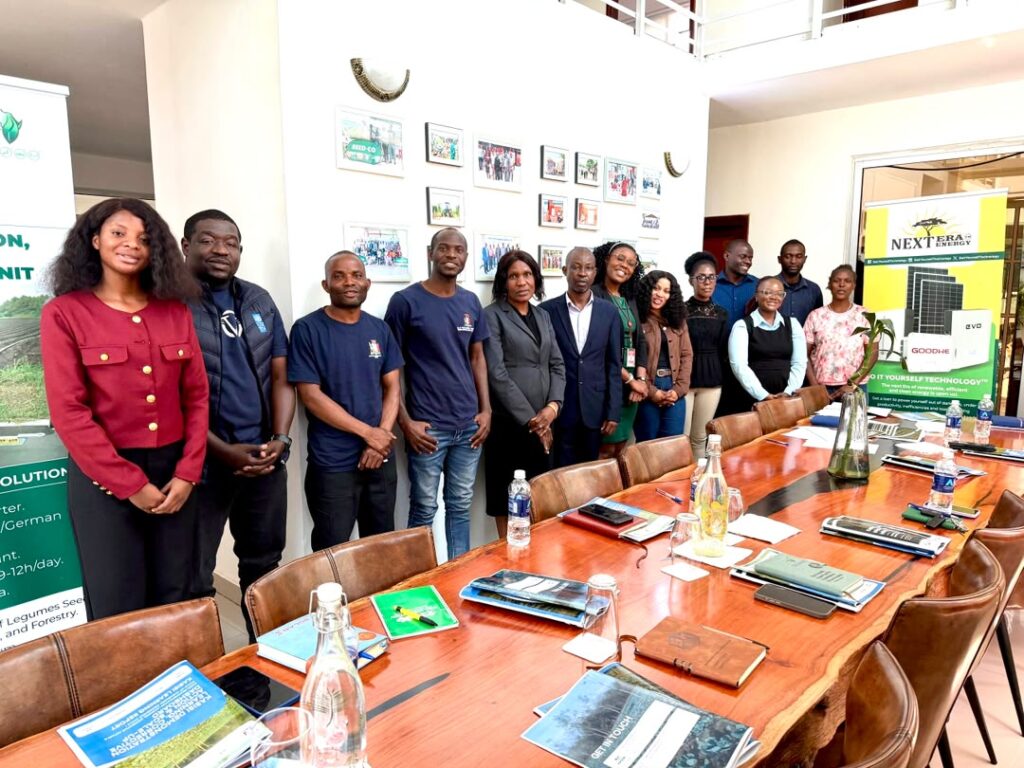
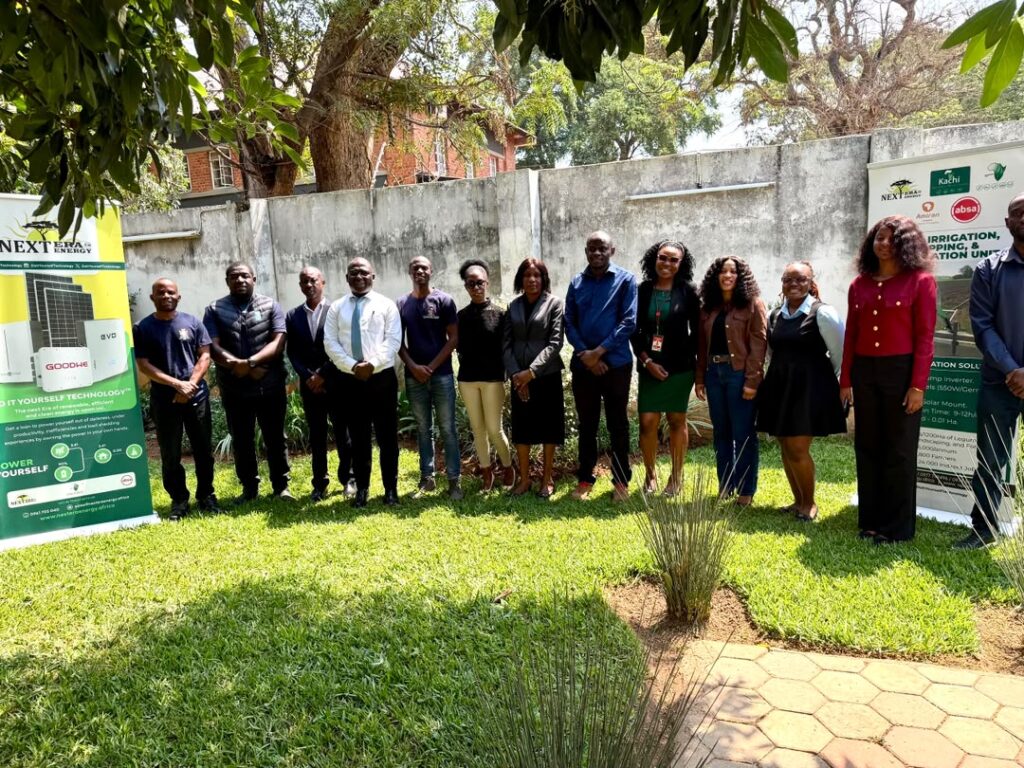
KASISI Progress Shared Ahead of Kanakantapa Farmers Field Day
Report Date: September, 2026
Government and development stakeholders were recently briefed on KASISI progress ahead of the Farmers Field Day scheduled for 25 September 2026 in Kanakantapa. The Q1–Q2 and ZARI-VRT reports highlight progress in irrigation, lead-farmer demonstrations, technical support, climate-smart agriculture, finance readiness and cooperative scale-up.
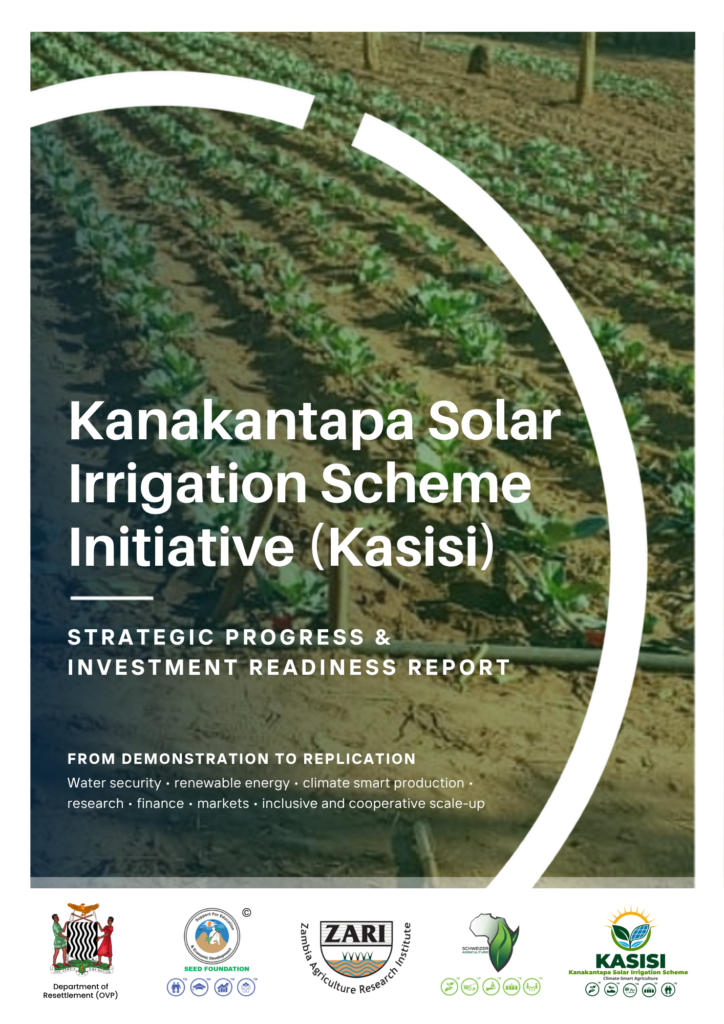
To access and download our comprehensive report click on the cover page or download button below link below.